
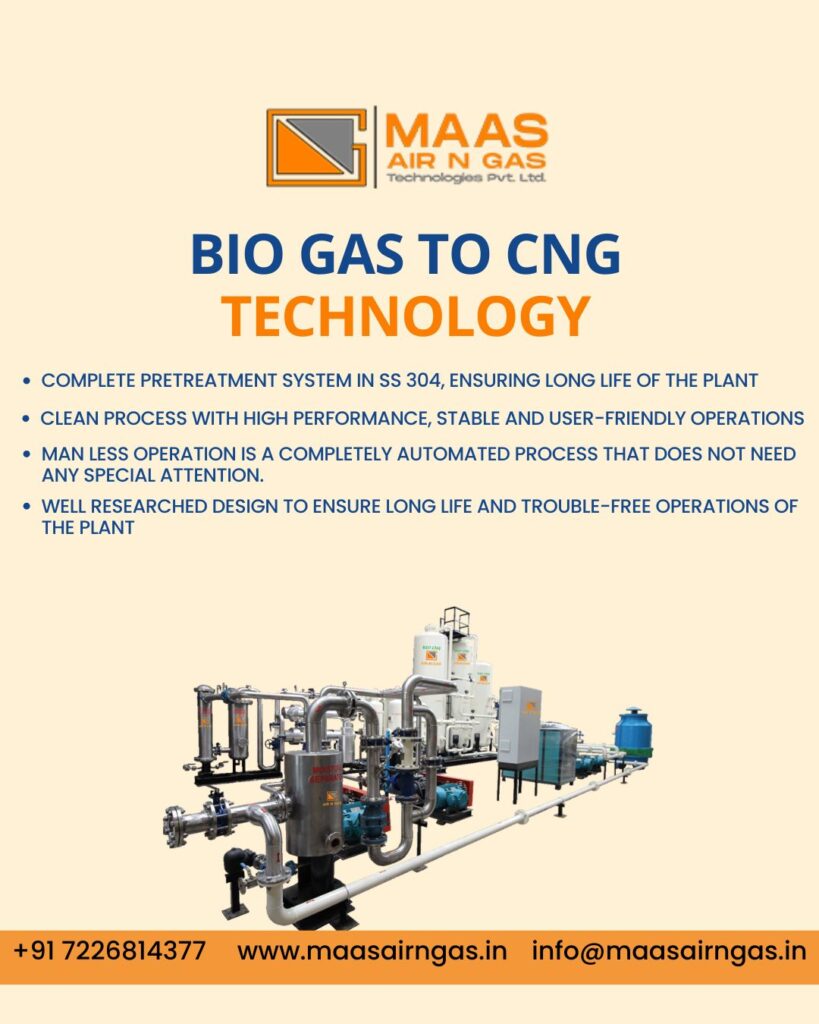
As industries and governments worldwide focus on reducing carbon emissions and promoting renewable energy, Bio Gas to CNG Technology has emerged as one of the most effective solutions for sustainable fuel production. This innovative technology converts biogas generated from organic waste into compressed natural gas (CNG)-grade fuel that can be used in vehicles, industries, and power generation systems.
With increasing concerns about fossil fuel dependency, rising fuel costs, and environmental pollution, organizations are actively investing in renewable alternatives. Bio-CNG offers a practical and eco-friendly solution because it transforms waste into a valuable energy resource. The technology not only supports cleaner energy production but also contributes to waste management and circular economy initiatives.
In this article, we will explore how Bio Gas to CNG Technology works, its advantages, applications, and why it is becoming a key component of modern energy infrastructure.
Table of Contents
- What is Bio Gas to CNG Technology?
- How Bio Gas to CNG Technology Works
- Major Components of a Bio-CNG Plant
- Benefits of Bio Gas to CNG Technology
- Industrial Applications
- Environmental Impact
- Future of Bio-CNG Production
- Why Choose Maa Air & Gas
- Conclusion
- FAQs
What is Bio Gas to CNG Technology?
Bio Gas to CNG Technology is a specialized process that upgrades raw biogas into high-purity methane suitable for compression and use as vehicle fuel or industrial gas. Biogas is typically produced through the anaerobic digestion of organic materials such as agricultural waste, food waste, animal manure, sewage sludge, and other biodegradable matter.
Raw biogas generally contains methane, carbon dioxide, hydrogen sulfide, moisture, and trace impurities. Through advanced purification and upgrading systems, unwanted gases and contaminants are removed, resulting in methane-rich gas that meets CNG quality standards.
The final product, often called Bio-CNG or compressed biogas (CBG), offers performance comparable to conventional natural gas while significantly reducing environmental impact.
How Bio Gas to CNG Technology Works
The process begins with the collection of biodegradable waste materials. These materials undergo anaerobic digestion inside specially designed digesters where microorganisms break down organic matter in the absence of oxygen.
The resulting biogas is then sent to a purification system. During this stage, carbon dioxide, hydrogen sulfide, moisture, and other impurities are removed using advanced gas treatment technologies.
Once purified, the methane-rich gas is compressed at high pressure and stored in cylinders or distribution systems. The compressed gas can then be used for transportation, industrial heating, power generation, and various commercial applications.
The entire process helps convert waste into a clean and commercially valuable energy source while reducing greenhouse gas emissions.
Major Components of a Bio-CNG Plant
A modern Bio-CNG facility consists of several integrated systems that ensure efficient gas production and upgrading.
Feedstock Handling System
This section manages the collection, storage, and processing of organic waste before digestion.
Anaerobic Digester
The digester is responsible for biological decomposition and biogas generation.
Gas Purification Unit
This system removes carbon dioxide, hydrogen sulfide, moisture, and contaminants from raw biogas.
Gas Compression System
The purified gas is compressed to achieve CNG-grade pressure for storage and transportation.
Storage and Distribution System
The final Bio-CNG product is stored safely and supplied for industrial or commercial use.
7 Powerful Benefits of Bio Gas to CNG Technology
1. Renewable and Sustainable Energy Source
Unlike fossil fuels, Bio-CNG is produced from renewable organic waste, making it a sustainable long-term energy solution.
2. Effective Waste Management
Agricultural residues, food waste, and animal waste can be converted into valuable fuel instead of ending up in landfills.
3. Lower Carbon Emissions
Bio-CNG significantly reduces greenhouse gas emissions compared to conventional fuels.
4. Reduced Dependence on Fossil Fuels
The technology helps countries decrease reliance on imported natural gas and petroleum products.
5. Economic Benefits
Waste-to-energy projects create additional revenue streams for industries, municipalities, and agricultural businesses.
6. High Energy Efficiency
Modern upgrading systems achieve high methane recovery rates, maximizing energy output.
7. Supports Circular Economy Goals
The process promotes resource recovery, waste reduction, and sustainable industrial development.
Industrial Applications of Bio Gas to CNG Technology
The adoption of Bio Gas to CNG Technology is expanding across multiple sectors due to its versatility and environmental benefits.
Transportation companies use Bio-CNG as an alternative vehicle fuel for buses, trucks, and commercial fleets. Industrial facilities utilize the gas for heating processes and energy generation. Municipal corporations employ Bio-CNG plants to manage organic waste while producing renewable energy.
Agricultural operations also benefit from converting livestock and crop waste into valuable fuel, creating additional income opportunities while improving waste disposal practices.
Environmental Impact of Bio Gas to CNG Technology
One of the most important advantages of Bio Gas to CNG Technology is its positive environmental impact. Organic waste that would otherwise release methane into the atmosphere is converted into useful fuel.
Methane is a potent greenhouse gas, and capturing it through biogas systems helps reduce global warming potential. Additionally, the process minimizes landfill waste, reduces groundwater contamination risks, and supports cleaner air quality.
According to the official renewable energy initiatives promoted by the Ministry of New and Renewable Energy (MNRE), compressed biogas plays an important role in India’s transition toward sustainable energy and waste-to-wealth programs.
Future of Bio Gas to CNG Technology
The future of Bio Gas to CNG Technology looks promising as governments and industries continue investing in renewable energy infrastructure. Increasing environmental regulations, rising fuel prices, and growing awareness about sustainable development are driving demand for Bio-CNG solutions.
Advanced gas upgrading technologies are improving methane recovery efficiency while reducing operational costs. As technology evolves, Bio-CNG is expected to become an even more significant contributor to global clean energy production.
The integration of digital monitoring systems, automation, and smart process controls is also enhancing plant performance and reliability.
Why Choose Maa Air & Gas for Bio Gas to CNG Technology Solutions?
Selecting the right technology partner is critical for the success of any Bio-CNG project. Maa Air & Gas offers advanced gas processing solutions designed to deliver efficiency, reliability, and long-term operational performance.
With expertise in gas purification, compression systems, industrial gas engineering, and customized plant solutions, Maa Air & Gas helps clients achieve optimal productivity while meeting environmental standards. The company focuses on quality equipment, innovative engineering, and dependable technical support throughout project execution.
For businesses seeking efficient Bio-CNG production systems, Maa Air & Gas provides tailored solutions that align with modern industry requirements.
Internal Link Suggestion: Explore other gas generation and purification solutions available at https://maasairngas.in/
Featured Snippet: What is Bio Gas to CNG Technology?
Bio Gas to CNG Technology is a process that upgrades raw biogas produced from organic waste into high-purity methane suitable for compression and use as CNG fuel. The technology removes impurities such as carbon dioxide, hydrogen sulfide, and moisture, creating a clean, renewable, and environmentally friendly energy source.
Conclusion
Bio Gas to CNG Technology is transforming the renewable energy landscape by converting waste into a valuable fuel source. The technology supports sustainability goals, reduces greenhouse gas emissions, improves waste management practices, and provides a practical alternative to fossil fuels.
As industries and governments continue prioritizing clean energy solutions, Bio-CNG production is expected to play a crucial role in future energy systems. Investing in advanced gas upgrading and compression technologies can help organizations achieve both economic and environmental benefits while contributing to a greener future.
FAQs
1. What is Bio Gas to CNG Technology?
Bio Gas to CNG Technology converts raw biogas from organic waste into high-purity methane that can be compressed and used as vehicle fuel or industrial gas.
2. What materials are used to produce biogas?
Agricultural waste, food waste, animal manure, sewage sludge, and biodegradable organic materials are commonly used.
3. Is Bio-CNG environmentally friendly?
Yes. Bio-CNG reduces greenhouse gas emissions, supports waste management, and helps replace fossil fuels.
4. Where is Bio-CNG commonly used?
Bio-CNG is used in transportation, industrial heating, power generation, municipal waste projects, and agricultural operations.
5. Why choose Maa Air & Gas for Bio-CNG solutions?
Maa Air & Gas provides advanced gas purification, compression, and engineering solutions designed for efficient and reliable Bio-CNG production systems.
Leave A Comment